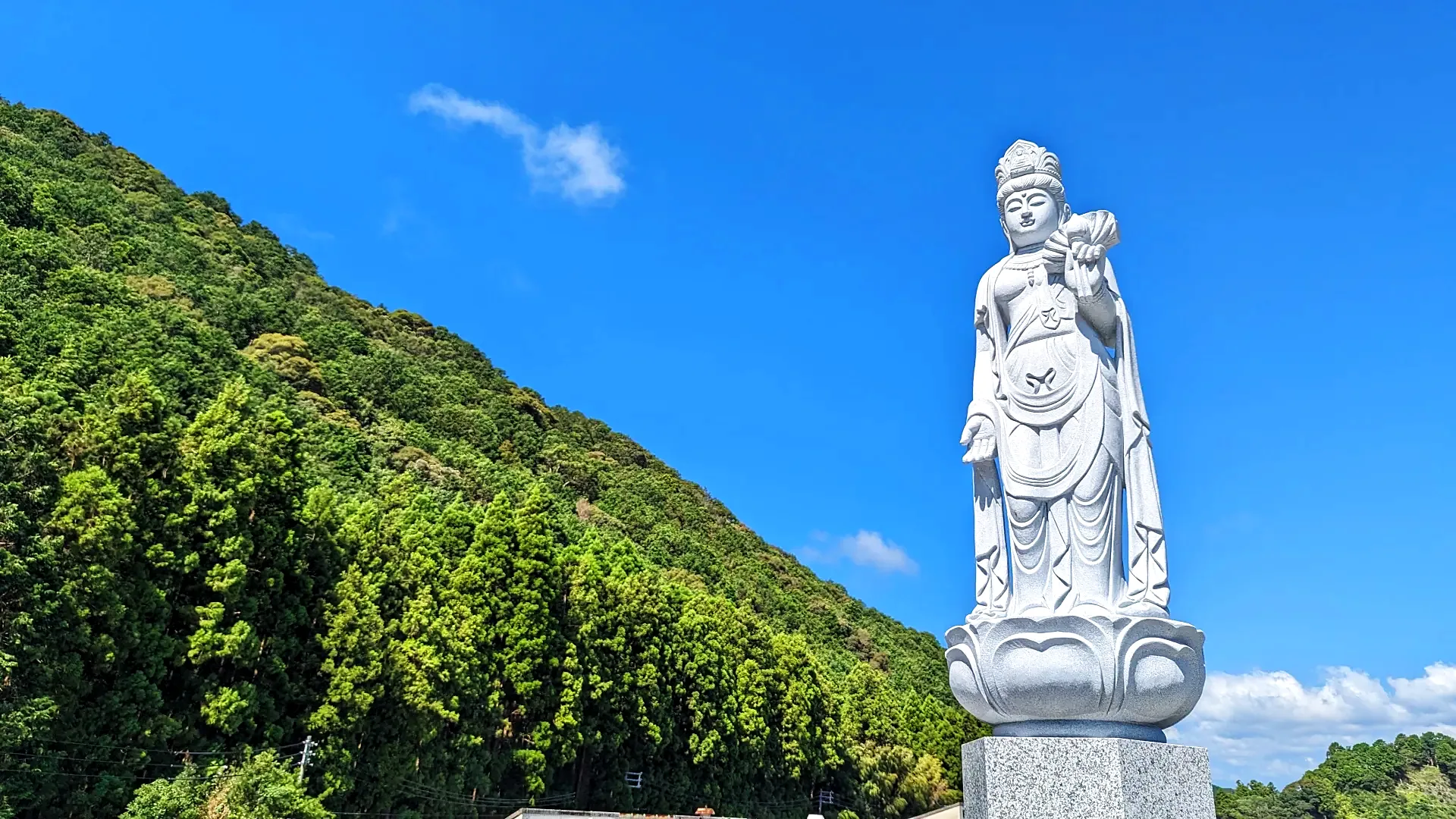
A few minutes from Nachi Station, far below the famous waterfall, stands a small temple with one of the strangest stories in Kumano. From Fudarakusan-ji, monks once sailed out to sea in boats they could not leave, hoping to reach paradise.
The voyages
The practice is called Fudaraku tokai, “crossing to Fudaraku”. Fudaraku is the paradise of Kannon, the bodhisattva of compassion, which was believed to lie across the southern sea.
- The voyages are said to have taken place from 868 to 1722
- Old records count more than twenty of them
- The boat carried food for about thirty days
- The cabin is said to have been nailed shut from the outside before the boat set sail
What to see
- The boat. A reconstruction of a voyage boat stands in the temple grounds
- The stone monument, carved with the names of the monks who set out
- The principal image, a thousand-armed Kannon with eleven faces, designated an Important Cultural Property of Japan
- Kumano Sansho Omiwasha, the shrine next door, also called Hama-no-miya Oji. The beach once came right up to it, and pilgrims are said to have purified themselves in the sea here before climbing to Nachi
Fudarakusan-ji is part of the UNESCO World Heritage site “Sacred Sites and Pilgrimage Routes in the Kii Mountain Range”.
The end of the Ohechi route
The coastal Ohechi route of the Kumano Kodo, which starts in Tanabe, ends at this temple. From here the pilgrimage turns inland and climbs Daimonzaka to Kumano Nachi Taisha and Nachi Falls.
Getting there
| By train | A few minutes on foot from JR Nachi Station |
|---|---|
| By bus | About 10 minutes from Kii-Katsuura Station on the bus bound for Nachisan. Get off at Nachi Station |
Opening hours change. Please check the official tourist information before you go.
Two memorials on one trail
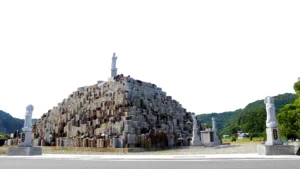
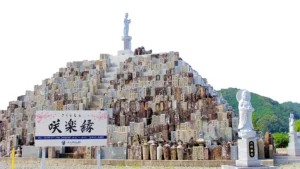
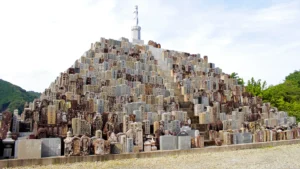
Fudarakusan-ji remembers monks who gave their lives for their faith. Further back along the same Ohechi route is another kind of memorial: Sakuraen, a pyramid of old family gravestones, kept and prayed for instead of being crushed. It is certified as the tallest grave memorial tower in Japan, and it is free and always open.